


 Filtres

The Anti-Museum: an Anti-Documentary
Opening: Wednesday, October 18 at 5 p.m.
Artists: Stefan Brüggemann, Graciela Carnevale, Philippe Decrauzat, FM Einheit, Henry Flynt, Kenneth Goldsmith, Swetlana Heger, Liliane Lijn, Ben Morea, Ben Vautier
An exhibition by Mathieu Copeland
In partnership with the library of the Université du Québec en Outaouais
Produced with the support of the Leeds School of Art – Leeds Beckett University
The Anti-Museum: an Anti-Documentary
Still marked by questions that emerged during its collaborative and transdisciplinary research laboratory Searching for an Opening (2020-2021), Galerie UQO continues its conversation with curator Mathieu Copeland on the subject of exhibition closures. Like the one Galerie UQO announced and claimed in 2020, gallery closures are powerful political gestures that make us reconsider how work is defined within the cultural sector and how spaces that normally present art can be used. The pandemic led to the closure of businesses, stores, and cultural spaces, putting millions out of work; in doing so, it generated a new normal of social distancing and virtual spaces. Narrated by musician Henry Rollins, the film The Anti-Museum: an Anti-Documentary looks at the forced closure of museums and exhibitions, and imagines alternatives for producing and presenting contemporary art.
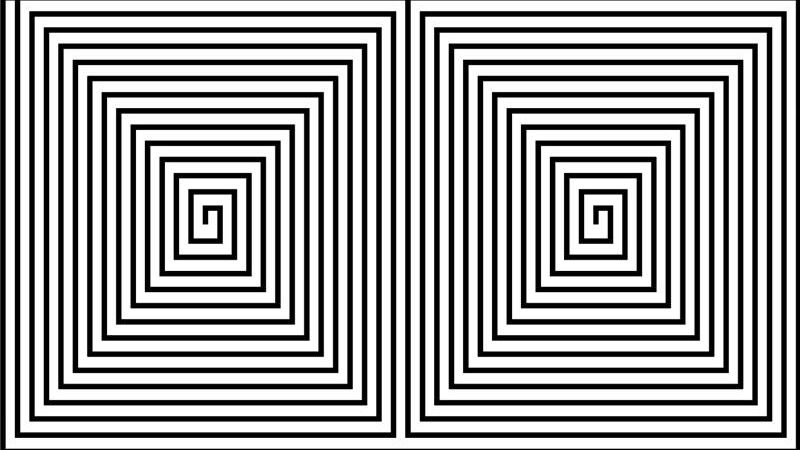
In resonance with the film's continuous projection on a painting by artist Philippe Decrauzat, Copeland presents an (anti-)exhibition that imagines a sensitive approach to the proposal of an anti-museum through new interventions by international artists Stefan Brüggemann, Graciela Carnevale, FM Einheit, Henry Flynt, Kenneth Goldsmith, Swetlana Heger, Liliane Lijn, Ben Morea and Ben Vautier. This exhibition is conceived as an anti-documentary that evokes, through the radical nature of the artworks it presents, a sense of what an anti-museum could be. The exhibition will open with a day of conversation and discussions between the artists and exhibition researchers and curators who will address the fundamental issues behind the concepts of anti-art, anti-philosophy, or anti-music to highlight the founding concept of artist and activist Gustav Metzger: the need for art to change the world.
—
Biographies
Spanning—and sometimes combining—sculpture, video, painting, and drawing, Stefan Brüggemann’s work deploys text in conceptual installations rich with acerbic and social critique and a post-pop aesthetic. His work is characterized by an ironic conflation of Conceptualism and Minimalism. In this way, Brüggemann’s practice sits outside the canon of the conceptual artists practicing in the 1960s and 1970s, who sought dematerialisation and rejected the commercialisation of art. Instead, his aesthetic is refined and luxurious, while maintaining a punk attitude. The philosophy of language is a crucial tenet in Brüggemann’s practice, in which text functions as a fluid medium, utilized for both form and meaning; his choice of words is typically provocative, acerbic, and topical. Brüggemann’s masterful wordplay and conceptual rigour coalesce to create a bold and pertinent body of work focusing on themes of appropriation and displacement.
—
Argentinian artist Graciela Carnevale was born in 1942 in the town of Marcos Júarez, but moved to Rosario when she was a teenager. She graduated from the Escuela de Bellas Artes, Universidad Nacional de Roasio, in 1964, and has served on its faculty since 1985. In 1965 she became involved with Grupo de Arte de Vanguardia (GAV) de Rosario, experimental artists (recent graduates of the Escuela de Bellas Artes) and other, more established artists from Rosario. In 1968 GAV made a dramatic shift when the group established Ciclo de Arte Experimental, a series of exhibitions organized every two weeks from May to October and each proposed by circle members. For her presentation, Carnevale organized Acción del encierro (Lock-up action), in which individuals attending the opening reception for the exhibition were locked in the gallery for more than an hour. Their only way to break free from the artwork was by shattering the gallery windows. A conceptual work, Acción was meant to incite violence as an art medium and also to serve as a metaphor for the growing social unrest under the de facto rule of Juan Carlos Onganía (1966–70). Carnevale returned to the production of art in 1994, when she joined Grupo Patrimonio. Since 2003 she and the artist Mauro Machado (b. 1954) have organized the alternative space El Levante, which offers workshops and residencies for young artists in an attempt to invigorate the art scene of Rosario.
—
Born in 1974 in Lausanne, Switzerland, Philippe Decrauzatsplits his time between Lausanne and Paris, France. Cofounder of the contemporary art centre Circuit, Decrauzat works in abstraction. Pushing painting beyond the frame with his cut out canvases, films, or even sculptures and installations, he is interested in the direct but ambiguous relationship between Op art and the viewer’s mind, and even their body. His painting and films establish a critical rapport with the history of Modernism by creating a visual and referential play with strategies of perception unique to historical avant-gardes and experimental practices, broadening his sources to fields as diverse as graphic design, music, and science-fiction. His work mobilizes optical phenomena that question the author as much as the status of the image. Their complex relationship with time and space—dilated, compressed, or cyclical—disrupts our understanding of them. His work is included in several public collections.
—
Frank-Martin Strauß, better known as FM Einheit and also known as Mufti, (born 18 December 1958, in Dortmund) is an industrial and electronic musician and actor from Germany. While primarily known for his percussion work with the influential group Einstürzende Neubauten, he has also collaborated with KMFDM, Goethes Erben and recorded several albums in collaboration with other musicians (such as Diamanda Galás, Mona Mur, Andreas Ammer, Ulrike Haage) and as a solo artist.
—
Henry Flynt was born in 1940 in Greensboro, NC. He is a philosopher, musician, anti-art activist and exhibited artist. Flynt’s work devolves from what he calls “cognitive nihilism,” In 1961, Flynt coined the term Concept art. In 1962, Flynt began to campaign for an anti-art position. He demonstrated against cultural institutions in New York in 1963 with Tony Conrad and Jack Smith, and against Stockhausen twice in 1964. He wanted art to be superseded by “veramusement” and “brend,” neologisms meaning approximately pure recreation. From about 1980, Flynt gave a great deal of time to "meta-technology" and "personhood theory." After that, he began to publish recorded but unreleased musical compositions; over a dozen CDs have appeared as of 2007. Because of his friendship and collaboration with George Maciunas, Flynt sometimes gets linked to Fluxus by unsympathetic reviewers.
—
Kenneth Goldsmith (born 1961) is an American poet and critic. He is the founding editor of UbuWeb and since 2020 is the ongoing artist-in-residence at the Center for Programs in Contemporary Writing (CPCW) at the University of Pennsylvania, where he teaches. He is also a senior editor of PennSound at the University of Pennsylvania. He hosted a weekly radio show at WFMU from 1995 until June 2010. He has published 32 books including ten books of poetry, notably Fidget (2000), Soliloquy (2001), Day (2003) and his American trilogy, The Weather (2005), Traffic (2007), and Sports (2008), Seven American Deaths and Disasters (2011), and Capital: New York Capital of the Twentieth Century(2015). He also is the author of three books of essays, Uncreative Writing: Managing Language in the Digital Age(2011), Wasting Time on The Internet (2016), and Duchamp Is My Lawyer: The Polemics, Pragmatics, and Poetics of UbuWeb (2020). In 2013, he was appointed the Museum of Modern Art's first poet laureate.
—
Swetlana Heger was born in the Czech Republic and grew up in Bregenz in Austria. She studied Fine Arts at the University of Applied Arts in Vienna and subsequently completed postgraduate studies at the Musashino Art University in Tokyo. After finishing her residence in Japan, Swetlana Heger lived and worked in the USA, where she started her artistic career with a focus on Conceptual Art. She has exhibited in numerous international museums, galleries, and institutions such as the Musée des Beaux-Arts de Nancy, Le Consortium, at the Wiener Secession, the Melbourne International Biennial, the Berlin Biennale, the Centre Georges Pompidou, at Artists Space, au Centre National de la Photographie, the Moderna Museet, at Hamburger Bahnhof, at manifesta11, at the 57th Venice Biennale, and more. In August 2017, Swetlana Heger was elected as the Head of the Department of Fine Arts at the Zurich University of the Arts (ZHdK) and as one of the members of the University’s leadership group.
—
Liliane Lijn (born 1939) is an American-born artist who was the first woman artist to work with kinetic text (Poem Machines), exploring both light and text as early as 1962; and in addition, she is in all likelihood the first woman artist to have exhibited a work incorporating an electric motor. Utilizing original combinations of industrial materials and artistic processes, Lijn is recognized for pioneering the interaction of art, science, technology, eastern philosophy and feminine mythology. She is known for her cone-shaped Koanseries. In conversation with Fluxus artist and writer, Charles Dreyfus, Lijn stated that she primarily chose to "see the world in terms of light and energy." Her work is represented in many public and corporate collections in Great Britain and elsewhere around the world.
—
For more than five decades, Ben Morea has been a key figure at the intersection of art and activism. Although his anarchist provocations are well-known, his artwork has only recently started to receive the recognition it deserves. The self-taught Morea began his artistic practice in the early-1960s, creating abstract paintings informed by Russian Suprematism, Abstract Expressionism, ancient art, and the mythological and spiritual writings of Carl Jung and Joseph Campbell. Inspired by the far-left politics of the 1960s, Morea developed an anarchist political orientation, leading him to reject the art world in 1966 and instead focus his energy on direct action and publishing radical political tracts. He was among the most dynamic provocateurs of the 1960s revolutionary underground to target the culture industry. In the tradition of action-oriented avant-garde movements like Dada and Situationism, he intervened in art, politics, and culture in New York City and beyond.
—
Ben Vautier (born July 18, 1935 in Naples, Italy), also known simply as Ben, is a French artist of Swiss origin. He gained public notoriety in the late 1960s through his text-based paintings on various surfaces and shapes. Part of the artistic post-modern avant-garde, Ben is one of the main founders of the Fluxus movement, and is associated with Lettrism. He is well-known for his performances, installations, and writing. Ben’s work is included in some of the world’s most prestigious private and public collections.
—
Mathieu Copeland is developing a practice that seeks to subvert the traditional role of exhibitions and renew our perceptions of these. Among others, he co-curated the exhibition Voids, A Retrospective at the Centre Pompidou in Paris and the Kunsthalle in Berlin in 2009, and was the co-editor of the anthology VOIDS. He initiated the series Exhibitions to Hear Read presented at MoMA, New York in 2013, and directed The exhibition of a film, an exhibition as a feature film for cinemas in 2015, and A Staged Exhibition in 2021. A Senior Lecturer at the Leeds School of Arts, Leeds Beckett University, Mathieu is one of the founders of an innovative approach to exhibition curation and the author of The Anti-Museum (Koenig Books, 2017).
Useful information
 Contacts
Complementary information
 Organizers
About the location
Galerie UQO
101 rue Saint-Jean-Bosco
Gatineau J8Y 3G5


